For most Bangladeshi shops, the best way to start with Facebook automation for small business is to automate replies to common questions, basic order taking and simple comment replies. After that, you can add post scheduling, follow‑ups and more advanced AI chatbots when you are comfortable.
This order is important because your customers mainly message you for price, size, colour, delivery and cash on delivery details. If you automate those parts first, your response time drops, you miss fewer orders, and you do not confuse people with over‑complicated bots.
Key Takeaways
- Start Facebook automation with simple auto replies, FAQs and basic order capture, not with full complex flows.
- Focus first on Messenger, Instagram inbox and Facebook comments, because that is where Bangladeshi customers actually place orders.
- Use Bangla and Banglish answers, keep a clear handover to a human, and always let customers correct address, size and payment.
- Add post scheduling, offers and follow‑ups only after your basic inbox and order automation is stable.
- Tools like Nabik AI combine Facebook chatbot, one inbox and order management in taka‑priced plans starting from free.
What Is Facebook Automation For Small Businesses?
Facebook automation for small business means using software to handle parts of your Facebook work without you touching every message or post yourself. For a Bangladeshi F‑commerce seller, this usually starts with auto replies in Messenger and on comments, plus automatic post scheduling. Later it can include AI that answers questions from your product list, books orders and updates customers on delivery.
If you are running your shop from Dhaka or outside Dhaka, you probably already feel the pain: 50+ inbox messages, “price pls” on every post, and late‑night calls. Automation is not about removing the human touch; it is about replying fast and only doing the parts that need a person. You let the system answer “delivery koto?”, but you still talk personally when there is a problem order.
To make this practical, break Facebook automation into a few areas you can work on step by step: messages, comments, posts and orders. In each area, ask two questions: what repeats every day, and what is risky if a bot makes a mistake? Automate the simple, repeatable tasks first and keep human control for things like refunds, special discounts and angry customers.
- Messages: instant greetings, FAQs, product info, basic order form.
- Comments: “inbox”, “price?”, “available?” and campaign replies.
- Posts: schedule regular product posts, offers and live reminders.
- Orders: collect name, number, address, delivery choice and COD notes.
- Follow‑ups: shipping updates, review requests, restock alerts.
Which Facebook Tasks Should You Automate First In Bangladesh?
Not every part of Facebook should be automated on day one. In Bangladesh, most small shops get sales from inbox and comments, so your first focus should be there. Posting and fancy flows can wait until you have message basics working well.
Think in three levels: must‑automate now, good‑to‑have later and keep‑manual. "Must" tasks are simple, repeated and low risk, such as greeting messages and showing delivery charges. "Good‑to‑have" tasks include scheduled posts and gentle follow‑up messages. "Keep‑manual" are things where a wrong reply can lose you money or create a Facebook complaint.
Use the table below to decide what to set up this month and what to park for later. Adjust it based on your own shop: a clothing Page, a food delivery Page and a salon Page will not be identical. But the order of priority is similar for most Bangladeshi F‑commerce shops.
- Start with auto replies for greetings, opening hours, delivery areas, payment options and simple price questions.
- Add automatic comment replies (like “Sent you inbox”) for "price?" and "details pls" type comments on ads and posts.
- Wait before automating special discounts, complex returns or angry customer handling – keep those for humans.
| Task | Priority For A Small Bangladeshi Shop | Why |
|---|---|---|
| Messenger greeting + basic FAQs | Automate now | Happens on almost every conversation, very low risk, big time saver. |
| Comment reply on "price?" and "inbox" | Automate now | Boosts reach, pulls buyers into inbox quickly, easy to control. |
| Collecting name, number, address for COD | Automate now | Removes typing work, reduces mistakes, but still confirm before shipping. |
| Scheduled product posts | Automate later | Helpful for consistency, but less urgent than message handling. |
| Upsell / cross‑sell suggestions | Automate later | Nice for growing order value, but only after basics are stable. |
| Refunds, disputes, special cases | Keep manual | Needs judgement and negotiation; risky if a bot answers wrong. |

How Do You Start With Auto Replies And FAQs?
Auto replies are usually the safest and most useful starting point. Your goal is simple: no customer should wait more than a few seconds to hear from you, even at 2am. The reply can say, in Banglish, “Salam apni jore ache, 10 tar moddhe reply dibo”, plus basic info on delivery and payment.
Inside Facebook, you can set a basic instant reply and away message, which is a good first step but limited. For richer, AI‑powered answers in Bangla/Banglish/English that use your own products and policies, you can use a tool like the Facebook AI chatbot inside Nabik AI. It can read your product list, prices and delivery rules, and answer things like “red XL stock ache?” without you typing.
To set this up safely, start small. First, cover these 5 FAQs: delivery area (Dhaka / outside Dhaka), delivery charge, payment methods (bKash/Nagad/COD), basic return time and average delivery time. Then teach the AI or rule‑based bot your product categories and any special notes (e.g. "pre‑order, 5–7 days"). Test everything from a personal account before going live.
- Write replies in the language your customers use most: full Bangla, Banglish or a mix.
- Keep answers short: 2–4 lines, with key info like "Inside Dhaka 70 taka, outside 130 taka".
- Always give a way to reach a human: e.g. “Human help dorkar? Just type ‘manush’ or call 01XXXXXXXXX.”
- Review auto replies weekly and edit based on real customer screenshots.
Step 1: List Your Top FAQs
Open your inbox and write down the 10 questions you see most often: price, size, colour, delivery, payment, return, etc.
Step 2: Draft Short Bangla/Banglish Answers
For each FAQ, write a clear 1–2 sentence answer, including exact amounts (e.g. Dhaka delivery 70 taka, outside 130 taka).
Step 3: Set Them Up In Your Tool
Add these answers into Facebook’s built‑in auto replies or into an AI chatbot tool like Nabik AI, and connect them to common keywords or AI intents.
Step 4: Test From A Personal Account
Use another Facebook account or ask a friend to message your Page with common questions and see if the replies are correct and polite.
How Can You Automate Comments, Orders And COD Safely?
In Bangladesh, many orders start from a simple comment: “Interested”, “price?”, “inbox pls”. If you reply late, the customer often buys from another Page. Automating comment replies helps you answer quickly and pull people into Messenger, while still letting a human take over when needed.
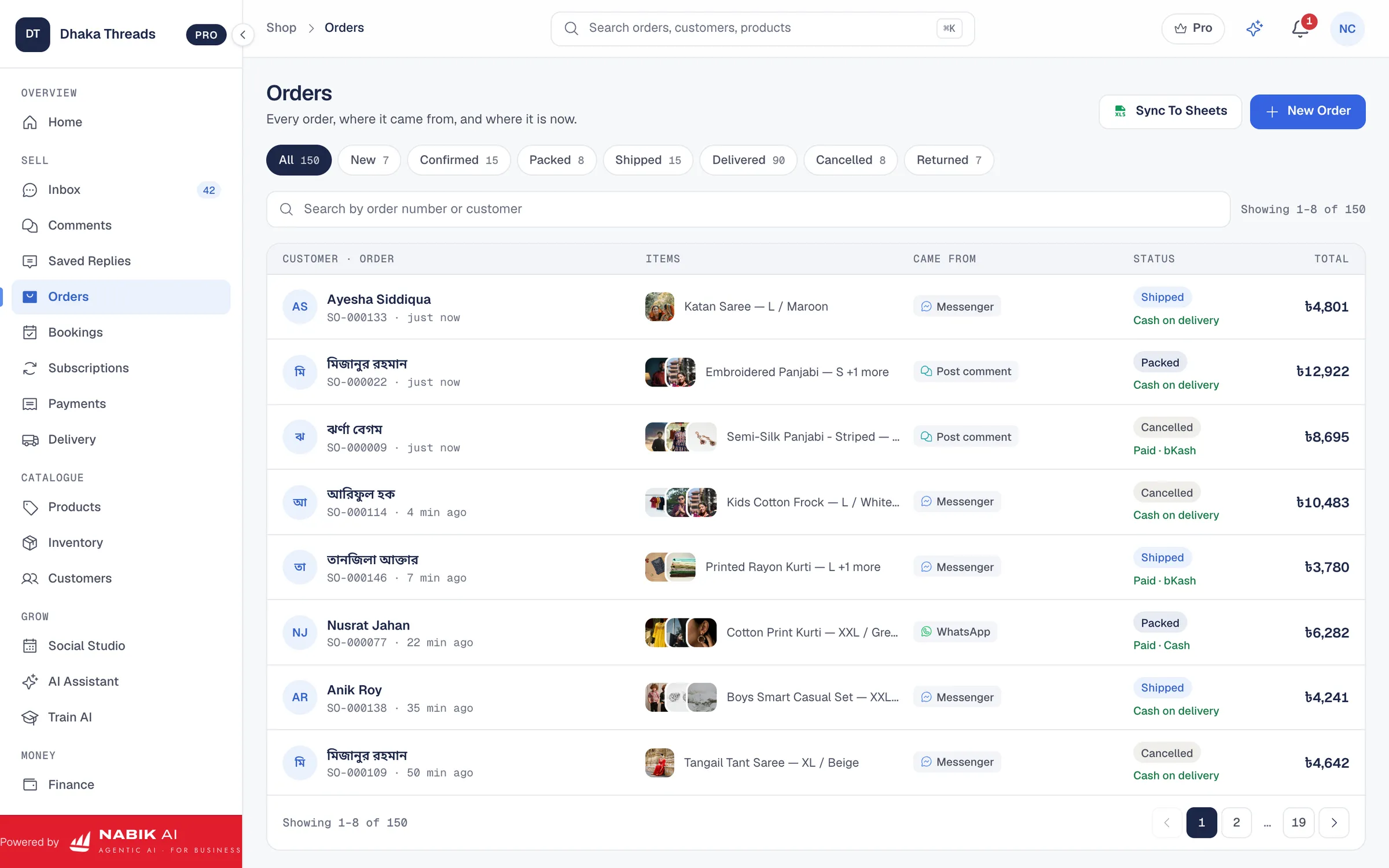
A safe strategy is: auto reply publicly with something like “Details sent in inbox 📨”, and automatically send them a message with key info and a question. That message can ask, in Banglish, “Kon colour/size lagbe? Name, phone, full address dite parben?” Once they answer, you or an AI assistant can turn it into an order. With a system like Nabik AI’s order management, those orders can be logged with cash on delivery, courier selection and status updates.
COD in Bangladesh has risk: fake addresses, returned parcels and customers who change their mind. Do not let a bot confirm an order and book a courier without basic checks. At minimum, you should review new orders, see if the address and phone look real, and maybe call first for high‑value items. Over time, you can add rules like "first‑time customer above 3,000 taka must be double confirmed" and keep that part manual.
- Use auto comment reply only on selected posts (e.g. running ads, new collection), not your whole Page at first.
- Ask for phone and address inside Messenger, not in public comments, for privacy and conversion.
- Send a clear order summary before final confirmation: product, size, colour, quantity, total with delivery and COD note.
- Tag risky orders (far districts, very high value) for manual review before shipping.
When Should You Automate Facebook Posts And Stories?
Once your inbox and basic order flow run smoothly, the next step is post automation. Many Bangladeshi shop owners post only when they are free, so some days you post 5 products, some days nothing. A scheduler helps you plan ahead so customers see you regularly in their feed without you being online all the time.
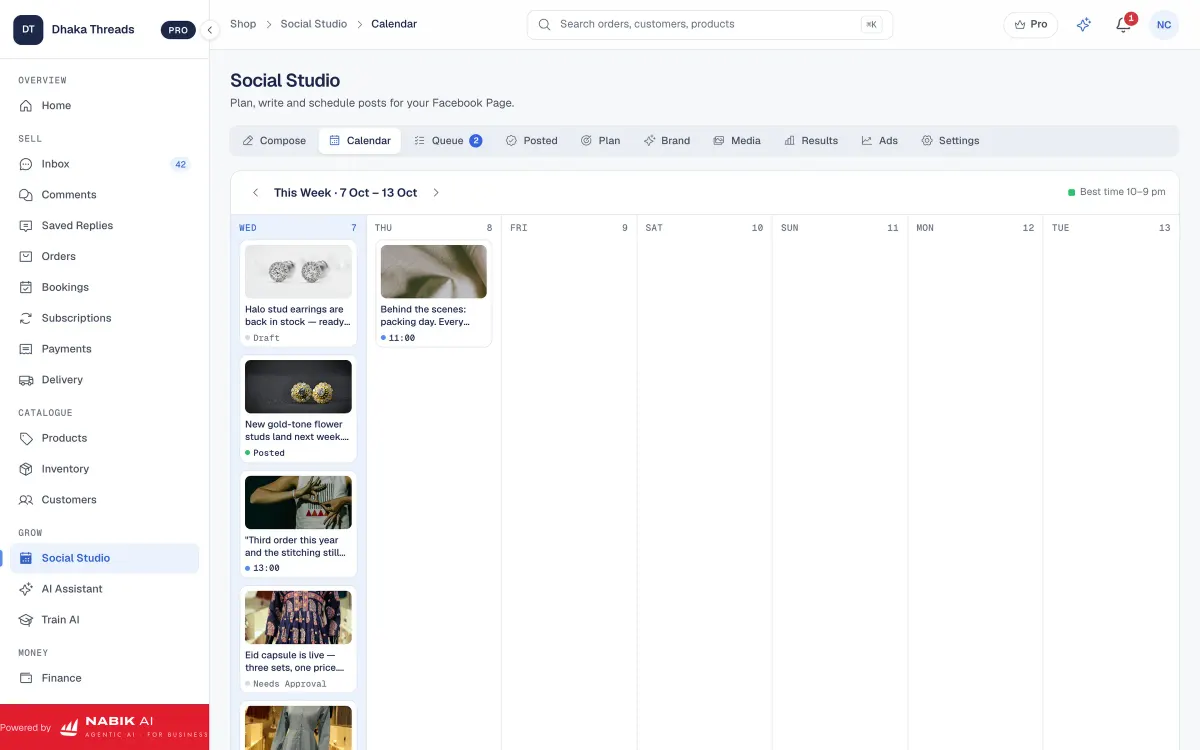
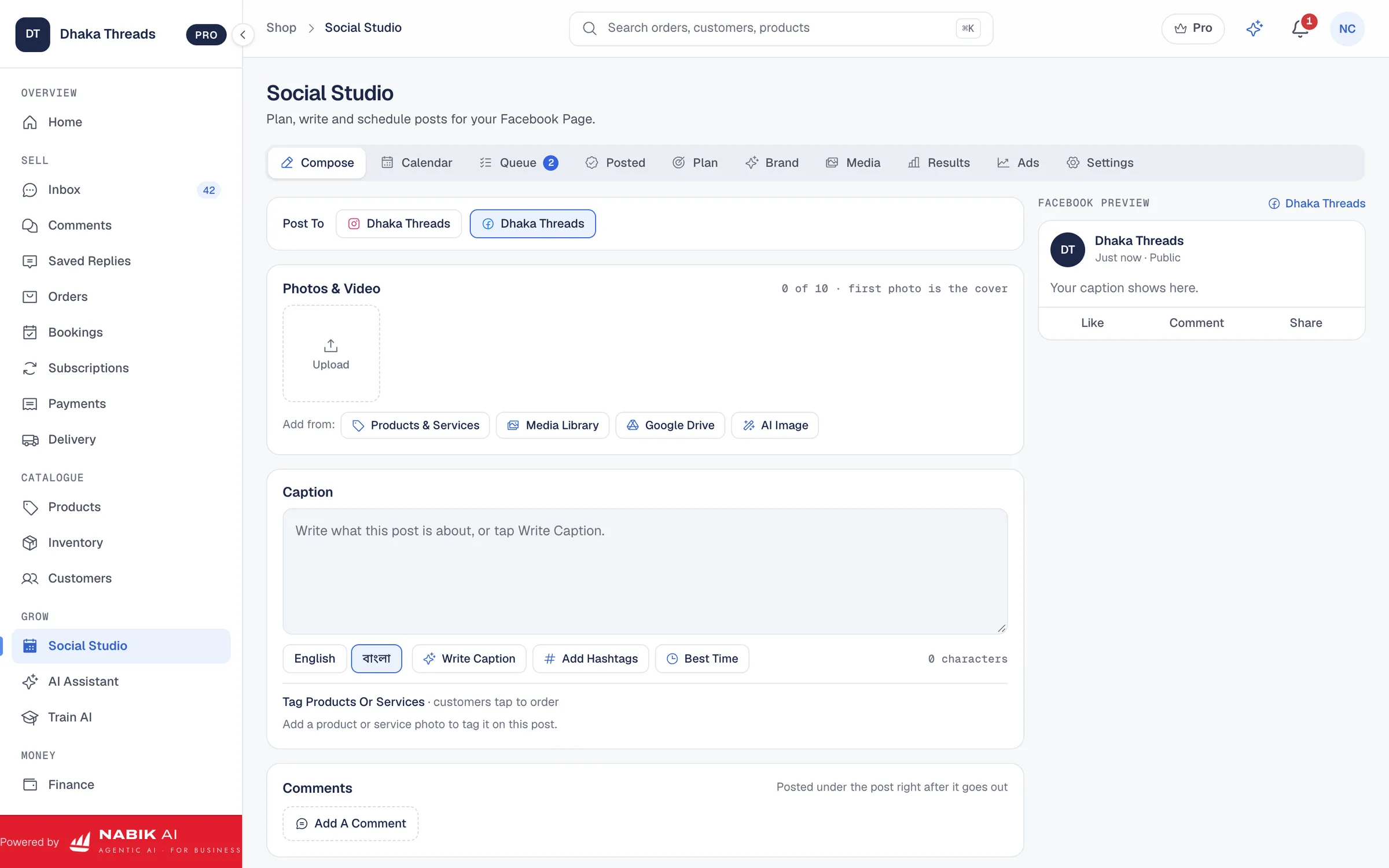
For most shops, a simple weekly posting plan is enough: 3–5 product posts, 1 customer review, 1 behind‑the‑scenes or fun post. You can use a tool like Nabik AI’s social media scheduler to queue these for Facebook and Instagram. The AI caption feature can turn your basic info (product, price, offer) into short Banglish copy that actually sells, and AI images can fill gaps when you do not have perfect product photos.
Timing also matters in Bangladesh. Your audience is usually active after office or class (8–11pm) and on weekends. Test a few slots and see where engagement is highest. Automation does not mean “post more”; it means “post consistently with less effort” so you can spend your time packing parcels and checking payments instead.
- Pick 3 fixed days and times per week and schedule posts for those slots.
- Mix content types: not only "New Arrivals" but also customer photos, FAQs and simple tips.
- Reuse winning posts: if one design sold out fast, post a similar structured caption with new designs.
- Keep descriptions short and clear for mobile users on slow connections.
How Do You Keep Facebook Automation Under Control?
The biggest fear many Bangladeshi shop owners have is, “Bot ulta palta reply dile customer ra ragbe.” That fear is valid. The solution is not avoiding automation, but controlling and monitoring it properly.
First, set clear rules for when automation should stop and a person should step in. For example, if the customer uses words like “cancel”, “problem”, “return”, “fraud”, or writes a long paragraph, route it to a human. Good tools show you which conversations are handled by bots and where you need to jump in. You should review tricky chats daily, the same way you check your bKash or Nagad statement.
Second, test every change you make. When you add a new FAQ or order question, try different versions of the same question from your phone in Bangla, Banglish and with spelling mistakes. See if the reply still makes sense. Finally, always keep a simple way to pause automation completely, for example during a big stock issue or courier strike, so you can talk to customers one by one if needed.
- Set trigger words that always hand over to a human: “cancel”, “return”, “wrong”, “late”, “complain”, etc.
- Check a sample of 10–20 automated chats every evening for mistakes and tone.
- Update your automated answers whenever you change delivery charge, courier partner or return policy.
- Tell customers they are chatting with an auto assistant first, then a human if needed – honesty builds trust.
How Does Nabik AI Help With Facebook Automation?
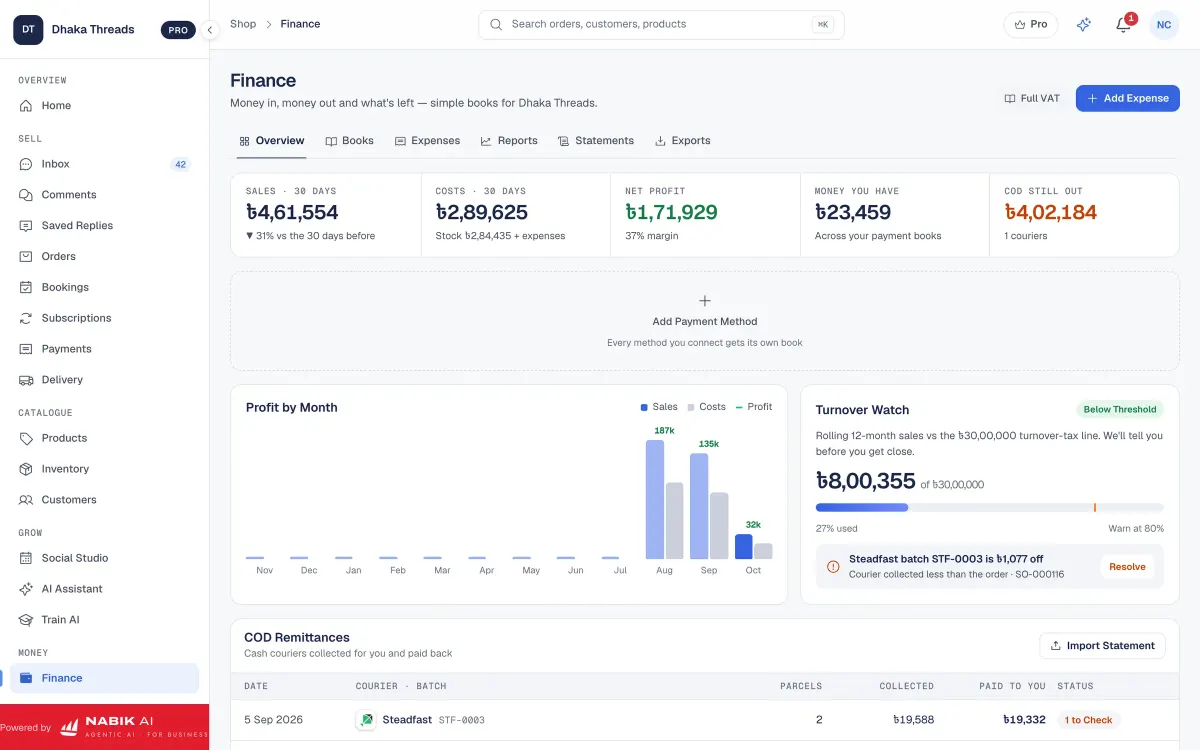
If you want to go beyond Facebook’s basic tools, Nabik AI can handle most of the automation we discussed, in Bangla, Banglish and English. It is web software made in Bangladesh by Auto Probaho Technology, built for shops, service businesses and content Pages that sell on Facebook, Instagram, WhatsApp and their own websites. You open it in your browser on desktop or phone; plans start free and paid plans begin from ৳1,999 per month for Pro and ৳3,780 per month for Business, with details on the pricing page.
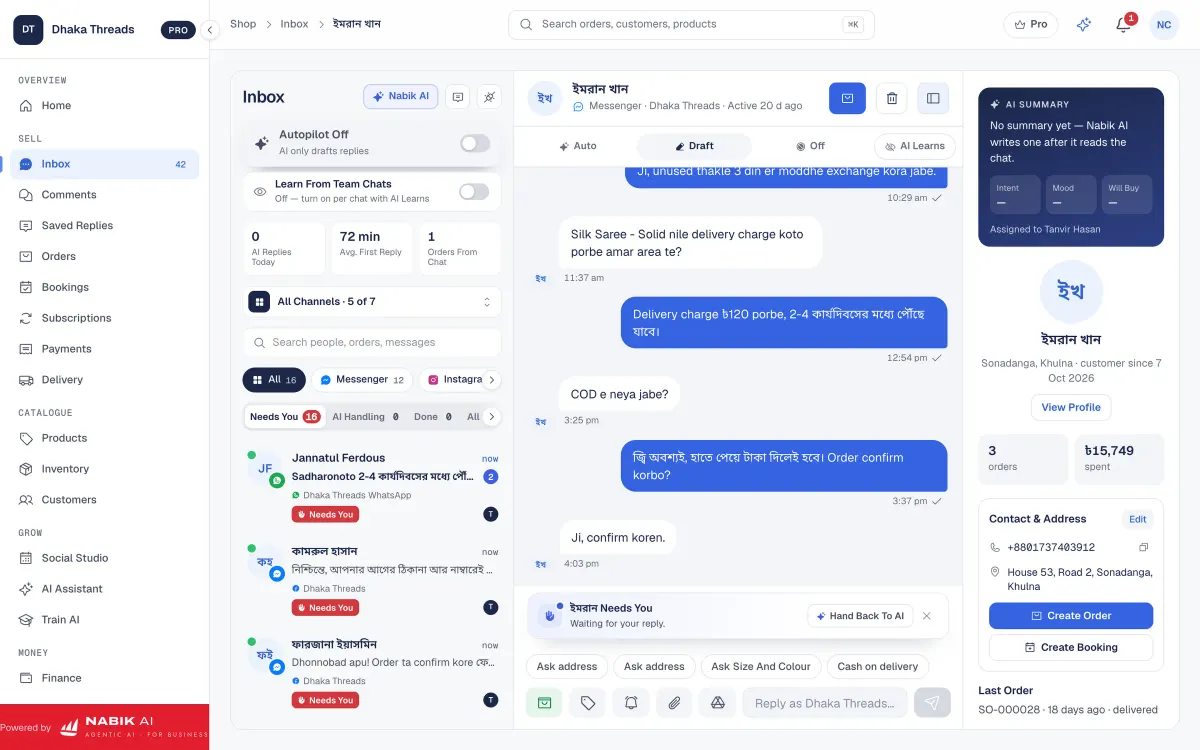
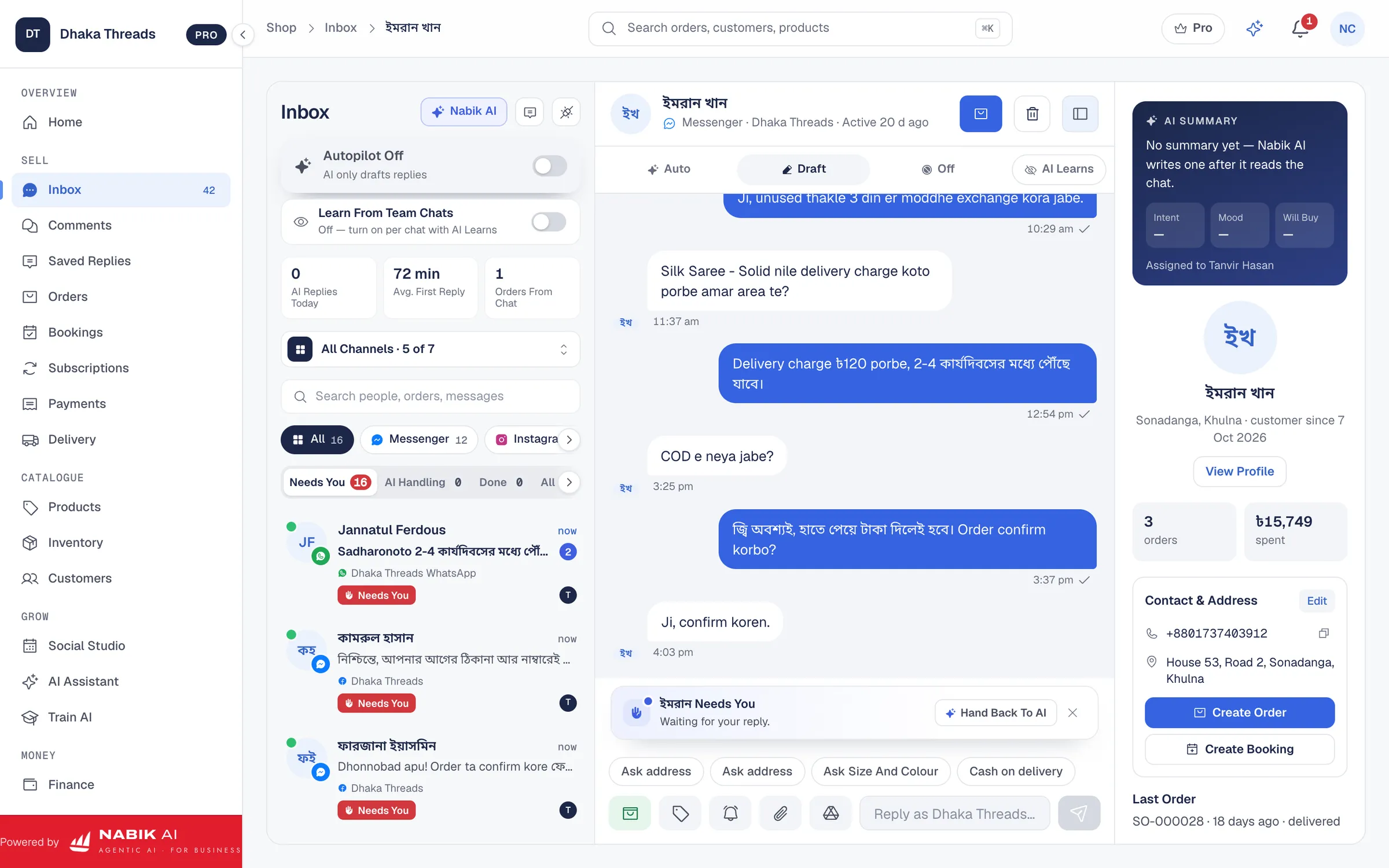
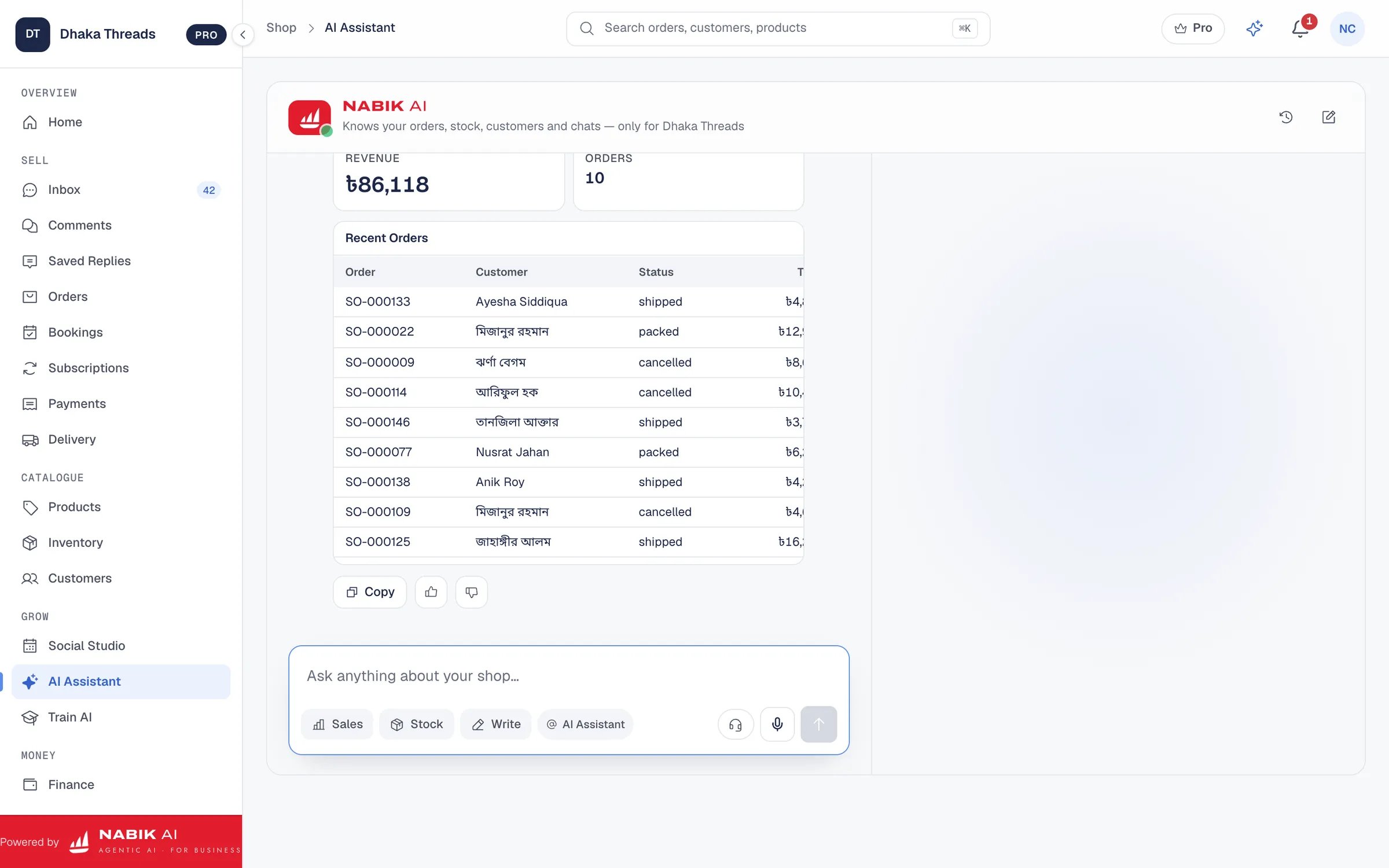
In Nabik AI, you get a Facebook AI chatbot that learns from your own products, prices and policies, and answers customers from Messenger and Instagram. Around it, there is a social inbox that shows messages and comments from Facebook, Instagram and WhatsApp in one place. From the same screen, you can create orders with cash on delivery, track them using order management, and keep stock synced across channels with inventory management.
For content, Nabik AI’s social media scheduler helps you plan and post to Facebook and Instagram, using AI captions and AI pictures if you like. Under the hood, its agents follow an approach explained in the agentic AI guide, so they can take actions like creating an order or booking a courier, then hand over to you when something does not match the rules. You teach Nabik AI simply by chatting with it, and it learns from every correction, so your Facebook automation becomes more accurate over time.
To try it, go to https://app.nabik.ai/signup, connect your Facebook Page and start with three things: set your greeting and basic FAQs, import or enter your main products, and define your delivery charges and COD options. Run it in parallel with your current manual process for a week, watching how it replies. When you are comfortable, let it handle more chats at busy times while you focus on packing, courier handovers and supplier work.
- Use Nabik AI’s chatbot to answer "price", "delivery", "size" and simple stock questions instantly in Bangla or Banglish.
- View and reply to Messenger, WhatsApp, Instagram and comments from one inbox instead of three different apps.
- Create, track and update COD orders directly from chat, with courier booking and stock deduction.
- Schedule Facebook and Instagram posts in advance so you are visible even on busy delivery days.
FAQ
What is the easiest Facebook automation for a small business in Bangladesh?
The easiest and safest Facebook automation for small business in Bangladesh is a simple instant reply and FAQ bot in Messenger. It welcomes the customer, shares delivery and payment details, and promises when a human will reply. You can add automatic comment replies and basic order forms once this is working well.
Do I need a website before setting up Facebook automation?
No, you can automate your Facebook Page even if you only sell through Messenger, WhatsApp and Instagram. Many Bangladeshi shops run fully on F‑commerce, using automation to answer questions and record COD orders. Later, if you open a website or WooCommerce/Shopify store, tools like Nabik AI can also connect to those.
Will Facebook automation annoy my customers?
It will annoy them only if it feels fake, wrong or blocks access to a human. If your bot replies quickly in natural Bangla or Banglish, shares useful info and clearly offers a way to talk to a person, most customers are happy. Always test your flows yourself and fix any confusing answers before scaling up.
How much does Facebook automation cost in Bangladesh?
Basic Facebook auto replies are free to set up from your Page settings. For advanced automation with AI chatbots, one inbox and order management, tools like Nabik AI offer plans starting from free, with Pro at ৳1,999 and Business at ৳3,780 per month as listed on the pricing page. Your main extra cost will be AI credits, which you can top up separately if you need more usage.
Can I automate Facebook in Bangla and Banglish?
Yes, you can and you should, because most Bangladeshi customers write in Bangla or Banglish. Facebook’s built‑in tools allow Bangla messages, and Nabik AI’s chatbot is designed to understand and reply in Bangla, Banglish and English. When training your automation, always use the same mixed language your customers use in real chats.