AI prompts for online shop owners can help you draft Facebook captions, product descriptions and customer replies faster. Copy the 20 prompts below, replace the details in brackets and check every price, size, delivery term and product claim before posting.
These prompts are written for Bangladeshi shops selling through Facebook, Instagram and WhatsApp. They work best when you give the AI accurate product information and ask for the language your customers use, whether that is Bangla, Banglish or English.
Key Takeaways
- Include exact product facts, prices, sizes and delivery terms in every prompt.
- Ask for one clear action, such as sending a message or confirming a size.
- Use Bangla or Banglish when that matches your customers’ messages.
- Review every AI draft before publishing or sending it to a customer.
How Do You Get Useful Results From An AI Prompt?
A useful prompt gives the AI a role, the information it needs and the format you want back. For a shop, that means sharing product details, the customer type, the platform and the language. If you leave out the price or delivery area, the draft may be polished but still unusable.
Replace every bracketed field before submitting a prompt. Use only facts you can confirm, especially for fabric, ingredients, warranty, stock and delivery charges. If you do not know a detail, tell the AI to leave it out rather than guess.
- Add the product name, materials or ingredients, available variants and confirmed price.
- Say whether the copy is for a Facebook post, Instagram caption, WhatsApp reply or product page.
- Specify a length, tone and language, such as “short, friendly Banglish”.
- Ask the AI to use only the facts you provide and mark missing information as a question.
Which Prompts Can Write Product Captions?
A caption should make the product clear and give the reader one sensible next step. Avoid asking for exaggerated claims such as “best in Bangladesh” unless you can support them. You can also ask for different versions to see which tone sounds right for your shop.
For a Facebook or Instagram post, include the audience and the actual product benefit. If you have a current offer, give its exact dates and conditions. For more ideas on writing post copy, see this guide to Facebook post captions that sell.
- 1. “Write a Facebook caption for [product]. Details: [facts and price]. Audience: [customer type]. Use friendly Bangla, keep it under 70 words, and end by asking customers to message us to order. Do not add claims or details I did not provide.”
- 2. “Create three Instagram caption options for [product] at ৳[price]. Use one warm, one playful and one straightforward tone. Mention [confirmed feature] and [available colours]. Keep each under 50 words and include a simple order call to action.”
- 3. “Write a short Banglish caption for [product] for customers in [area]. Include the confirmed delivery charge of ৳[amount] for [area]. Do not suggest free delivery or a discount.”
- 4. “Turn these product facts into a Facebook post: [paste facts]. Start with a question customers might ask, explain the product in plain language, and finish with [order instruction]. Keep the tone natural, not pushy.”

How Can AI Describe Products Without Making Things Up?
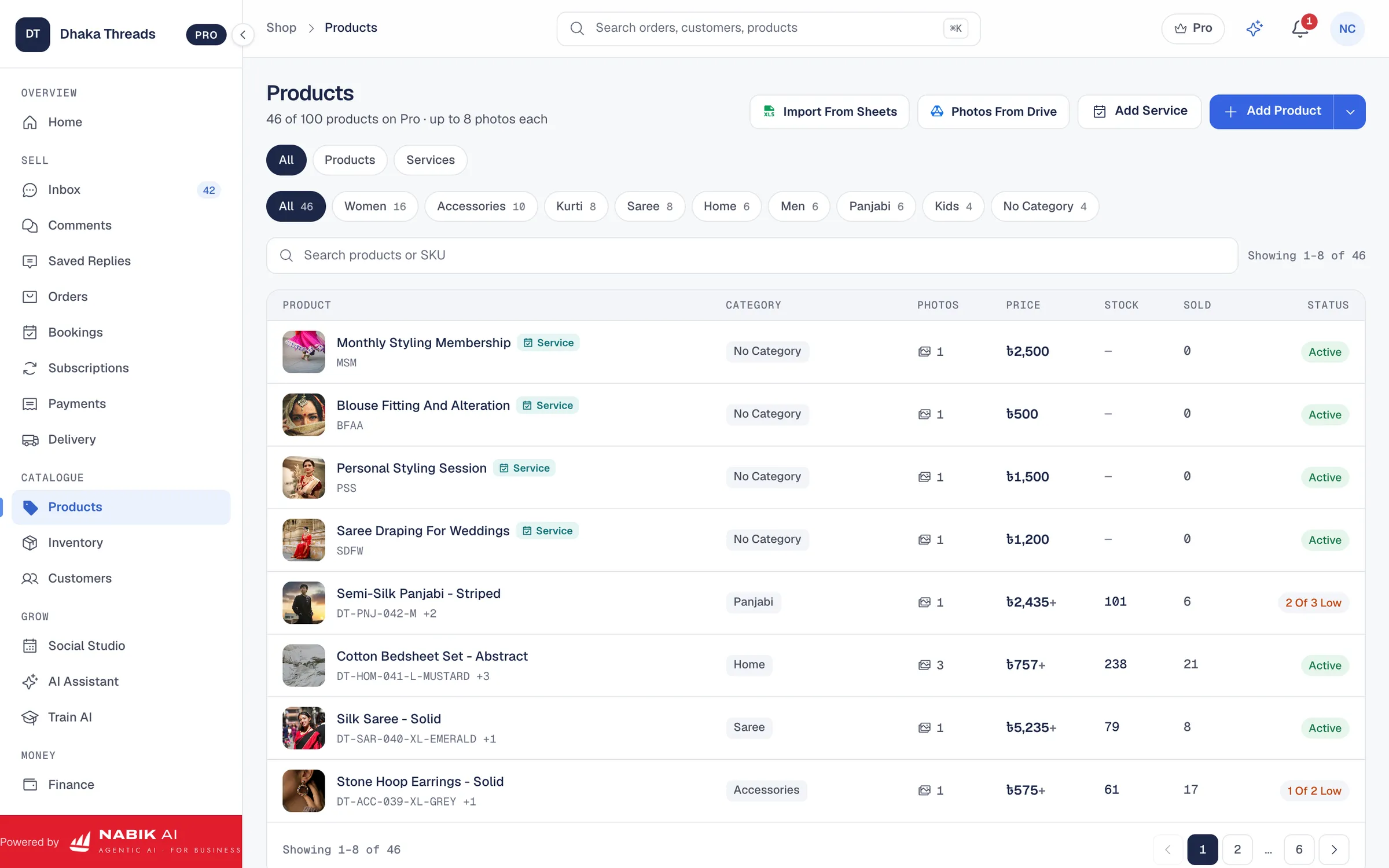
Product descriptions help shoppers compare an item before they send a message. Give the AI concrete information such as material, measurements, care instructions and what comes in the package. If you do not have a measurement or specification, leave it out until you confirm it.
A good description should answer common buying questions without making promises the shop cannot keep. Ask for scannable formatting when customers need to compare sizes or variants. For clothing, cosmetics or gadgets, you can also request a separate version for a product listing and a shorter version for a social post.
- 5. “Write a 100-word description for [product]. Use only these details: [paste confirmed details]. Include who it may suit, what is included and how to order. Do not invent a warranty, material or performance claim.”
- 6. “Turn these specifications into a simple product description for a Bangladeshi online shop: [paste specs]. Explain any technical terms in plain English and list missing details as questions for me.”
- 7. “Write a Bangla description for [clothing item]. Details: fabric [type], sizes [list], colours [list], price ৳[amount]. Keep the wording clear and do not say ‘premium’ unless that word is in the supplied facts.”
- 8. “Make a concise product-page description for [item] from this information: [paste facts]. Add a short ‘Please check before ordering’ note for [variant or measurement customers should confirm].”
What Prompts Help You Reply To Customer Questions?
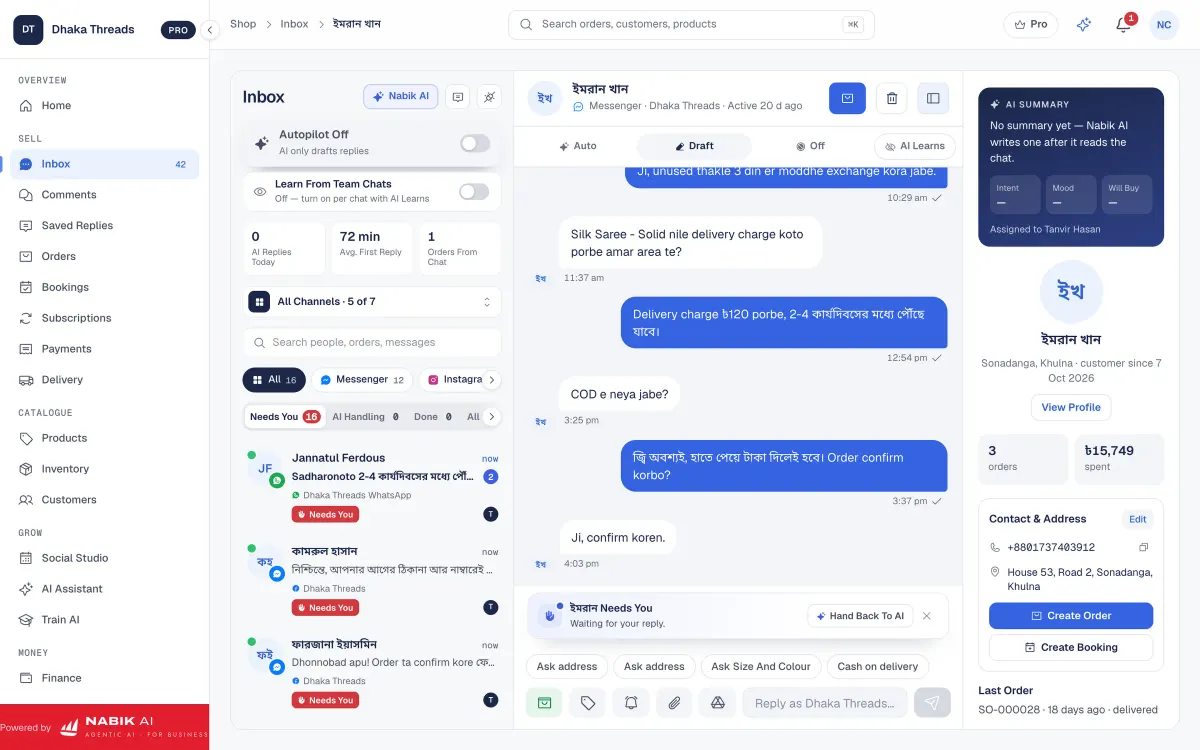
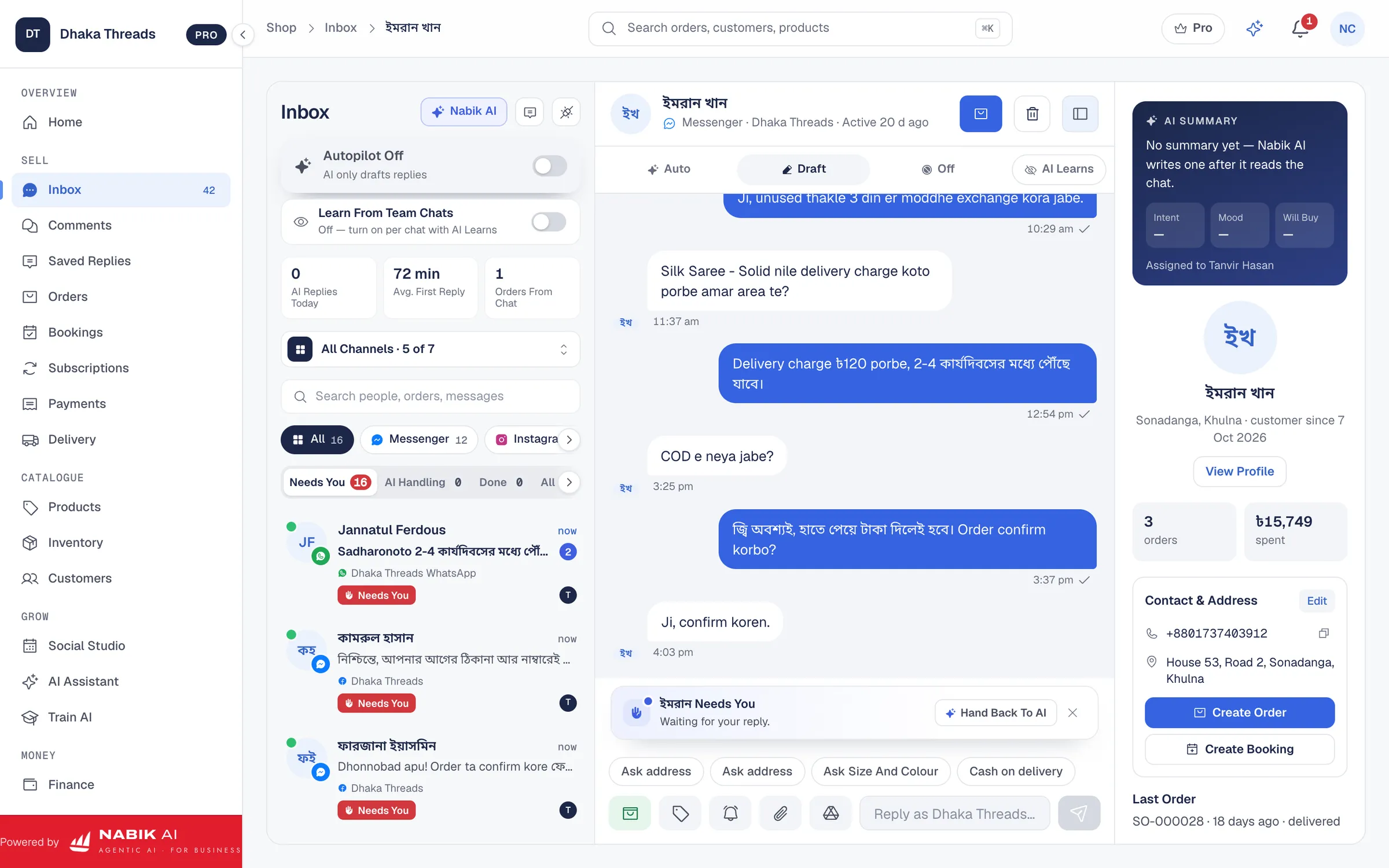
Customer replies need to be correct before they need to sound clever. Give the AI your real policy for delivery, payment, exchanges and stock, then ask it to answer only from that information. For an unanswered question, ask it to request the missing detail or hand the conversation to you.
Use short, human replies that fit the customer’s language. A customer asking “ঢাকায় delivery charge কত?” needs the confirmed Dhaka charge, not a long sales paragraph. For more advice about writing in both languages, read this guide to AI customer service in Bangla and Banglish.
- 9. “Reply to this customer in polite Bangla: ‘[paste customer message]’. Use only our policy: [paste relevant policy]. If the information is missing, ask one clear follow-up question instead of guessing.”
- 10. “Write a short Banglish reply to a customer asking about [size or colour]. Available options are [list]. Ask which option they want and do not claim that an option is in stock unless I confirm it.”
- 11. “A customer asks about delivery to [area]. Our confirmed courier charge and estimated delivery window are [details]. Write a friendly reply in [Bangla/Banglish/English] and make clear that the delivery timing is an estimate.”
- 12. “Write a calm reply to this complaint: [paste message]. Acknowledge the concern, ask for the order number if needed, and do not promise a refund, replacement or delivery date beyond this policy: [paste policy].”
Which Prompts Can Help With Offers And Campaigns?
Campaign copy should state the offer clearly, including who can use it and when it ends. Give the AI the exact discount, stock limit or delivery condition you have approved. Do not let it invent a deadline, scarcity claim or bundle that your shop is not actually offering.
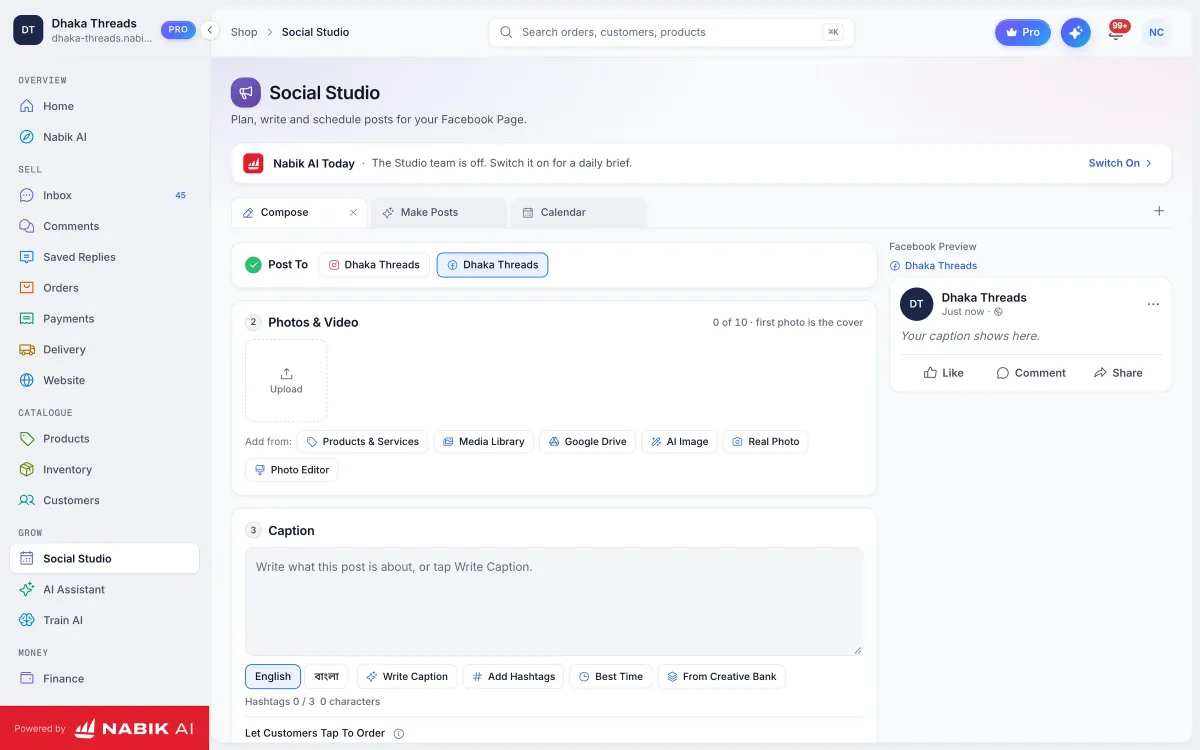
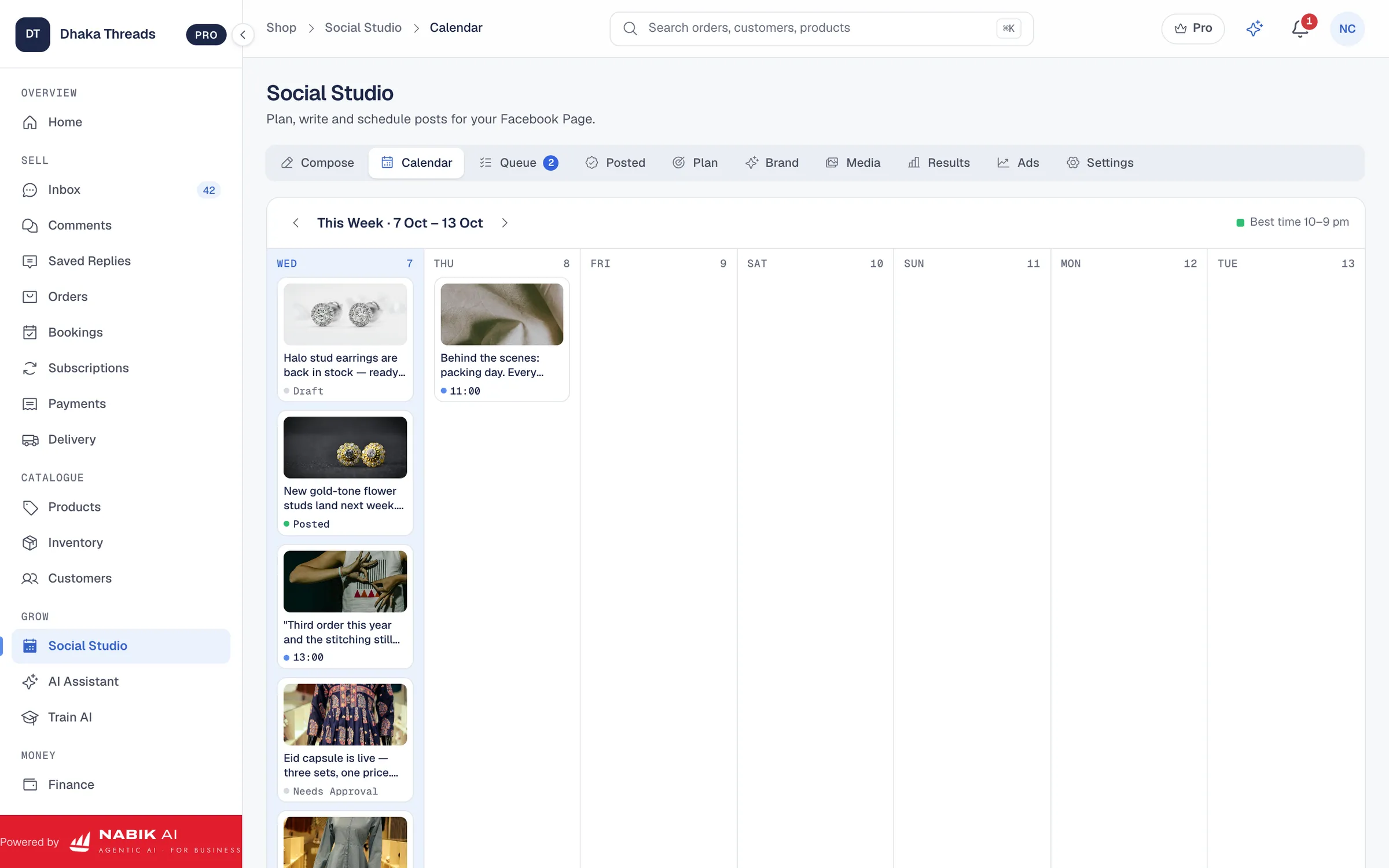
Ask for variations suited to each channel: a longer Facebook post, a brief Instagram caption or a WhatsApp message. You can schedule approved Facebook and Instagram posts with a social media scheduler, but still check the final wording and offer details yourself.
- 13. “Write a Facebook post for this offer: [exact offer], valid from [start date] to [end date], with these conditions: [conditions]. Use Bangla, explain how to order and do not add urgency or extra benefits.”
- 14. “Create three short campaign hooks for [product] aimed at [customer type]. Use these confirmed benefits: [list]. Keep each truthful, easy to understand and suitable for an Instagram caption.”
- 15. “Turn this approved offer into a WhatsApp broadcast message: [offer and conditions]. Keep it under 60 words, use a friendly tone and include a polite way to ask for the product or size.”
How Can You Adapt Prompts To Your Shop?
A prompt is a starting point, not a fixed template. If the answer is too formal, ask for simpler language; if it is too long, set a word limit. Make one change at a time so you can see whether tone, length or detail made the draft more useful.
Keep a small set of tested prompts for the tasks you repeat each week. Add your approved shop information where appropriate, but do not include private customer details unless you need them to resolve a specific issue. Nabik AI can answer from a shop’s own products, prices and policies, and the shop can teach it by chatting and correcting its answers.
- 16. “Rewrite this draft for [Facebook/Instagram/WhatsApp]. Keep the facts unchanged, use [language and tone], cut it to [word limit] words and keep one clear call to action: [paste draft].”
- 17. “Review this product copy against the facts below. List any claim that is unsupported, any important detail that is missing and any wording a customer could misunderstand. Facts: [paste facts]. Copy: [paste copy].”
How Can You Use These Prompts In A Daily Shop Workflow?
Start with one product and prepare a caption, a product description and replies to its most common questions. Compare each draft with your actual stock, prices and policies before using it. This simple check can catch mismatched sizes, outdated delivery charges and invented claims.
Nabik AI is web software made in Bangladesh by Auto Probaho Technology for shops, service businesses and content Pages selling on Facebook, Instagram, WhatsApp and their own websites. Its AI agents answer in Bangla, Banglish or English from the shop’s own products, prices and policies, take the order and hand over to a person when needed. You can explore the AI assistant for shop data or read how to teach AI your products and prices.
- 18. “Create a checklist of the facts I should confirm before publishing this post: [paste draft]. Focus on price, stock, variants, delivery, offer dates and claims.”
- 19. “Turn these approved product details into a caption, a 100-word description and a short reply to ‘How do I order?’ Keep facts consistent across all three: [paste details and order instructions].”
- 20. “Review these three drafts for inconsistent prices, sizes, delivery terms or product claims. Show the exact lines that need checking, but do not change any fact unless I provide the correction: [paste drafts].”
FAQ
Can I use these prompts with any AI writing tool?
Yes. They are general prompts you can adapt for an AI writing tool. Check that the tool has the correct product information before using its output.
Should I write prompts in Bangla or English?
Use the language that helps you explain the task clearly, then specify the language you want in the result. You can request Bangla, Banglish or English for different customers.
Can AI choose my product price or delivery charge?
Give it your confirmed price and delivery charge instead. Do not rely on AI to create these details, because they must match your shop’s actual terms.
How do I stop AI from inventing product details?
Tell it to use only the facts you provide and to ask about anything missing. Review every claim, specification and policy before posting or sending the reply.
What should I do if an AI reply is wrong?
Correct the information and update the prompt or source details you use next time. For a customer conversation, fix the reply before sending it and handle sensitive issues yourself.