F-commerce means doing business directly through Facebook, Instagram and WhatsApp instead of a full website. In Bangladesh, f-commerce usually means posting products on a Page and closing the sale in chat with cash on delivery through couriers.
For many Bangladeshi shops, this is the first and main way to sell online. You post pictures, reply to comments and DMs, note down orders, send them by courier and collect payment in cash or bKash when the parcel is delivered.
Key Takeaways
- F-commerce is selling through Facebook, Instagram and WhatsApp where orders are closed in chat instead of a traditional website cart.
- In Bangladesh most f-commerce shops use cash on delivery and couriers, which creates problems like fake orders and high returns.
- Common issues are missed messages, stock mistakes, manual order tracking and confusion about customer details and payments.
- Running a registered online business may need licences, VAT registration and clear policies; always confirm current rules with the Ministry of Commerce or an adviser.
- Tools like Nabik AI help Bangladeshi f-commerce shops answer customers automatically, manage one inbox, orders, inventory and couriers from one place.
What Is F-Commerce In Bangladesh?
F-commerce is “Facebook commerce” – selling products or services through social media platforms, mainly Facebook, Messenger, Instagram and WhatsApp. In Bangladesh, when people ask what is f-commerce, they usually mean a Facebook Page shop that takes orders in chat and delivers by courier with cash on delivery.
You do not need a full e-commerce website to start; a Page, a profile and a phone are often enough. Customers see your posts, comments or stories, then inbox you with messages like “price pls”, “available?” or “order dibo, cash on delivery”. You manually collect name, address, phone number, size/colour and confirm courier and payment method.
Many boutiques, cosmetics sellers, gadget shops and home bakers run fully on f-commerce. Some later add a website, but still get most orders from Messenger, Instagram DMs and WhatsApp. That is why understanding how f-commerce works, and how to manage its problems, matters for Bangladeshi sellers.
- You sell from social media, not from a typical website cart.
- Orders are closed inside chat (Messenger, Instagram DM, WhatsApp).
- Delivery is usually by courier with cash on delivery or bKash/Nagad.
- Works well for clothing, cosmetics, gadgets, food and services.
- You can start small with just a Page, phone and notebook, then improve your systems.
How Does F-Commerce Work Day To Day?
Running f-commerce in Bangladesh follows a simple daily cycle: post, chat, confirm, deliver, collect payment. You post product photos or reels on Facebook and Instagram with basic details and a call to action like “Inbox korun” or “WhatsApp this number to order”. People comment “pm”, “price” or DM you directly.
You or your team then reply from Messenger, Instagram or WhatsApp. A typical chat goes: “Size?” – “38, 40, 42” – “40 lagbe, cash on delivery, address Mirpur 10…”. You copy this into a notebook, Google Sheet or an app, assign a courier, and mark the order as “confirmed”.
Next, you hand over the parcel to a courier with customer details and COD amount. The courier attempts delivery, collects cash or bKash, and later pays you after deducting delivery charge and COD charge. Throughout, customers may message “order status?”, “parcel koi?” so you need to check courier tracking and reply.
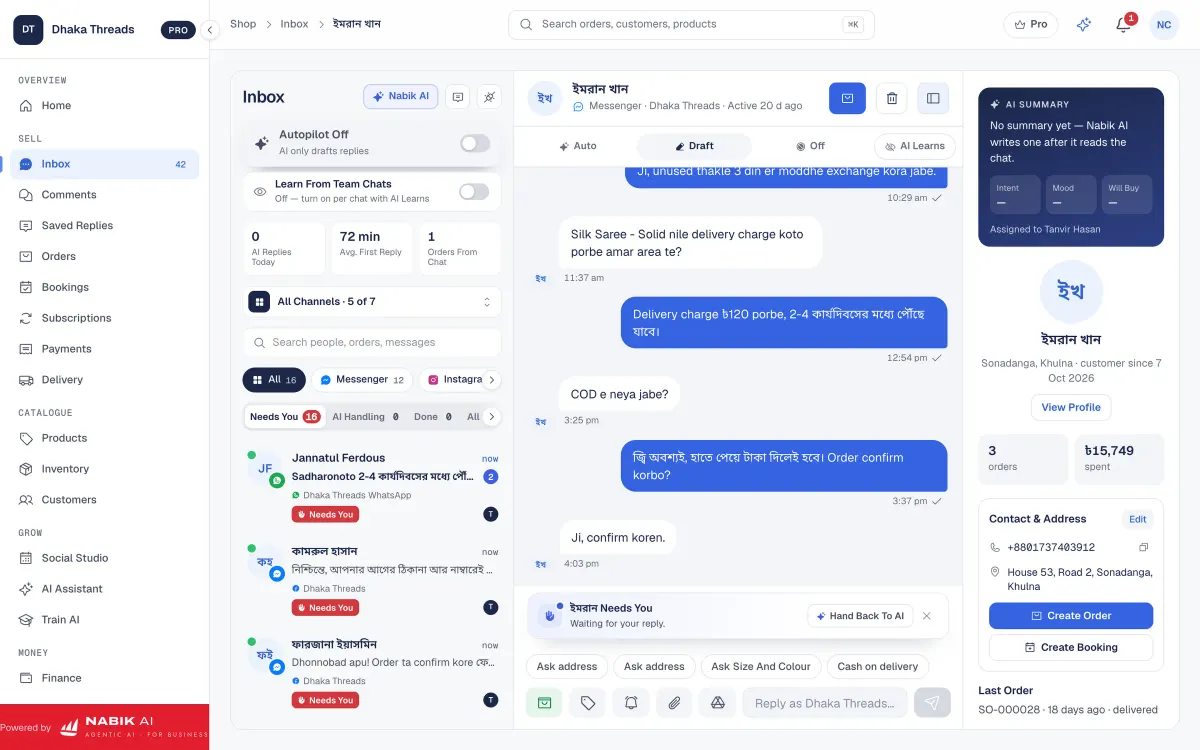
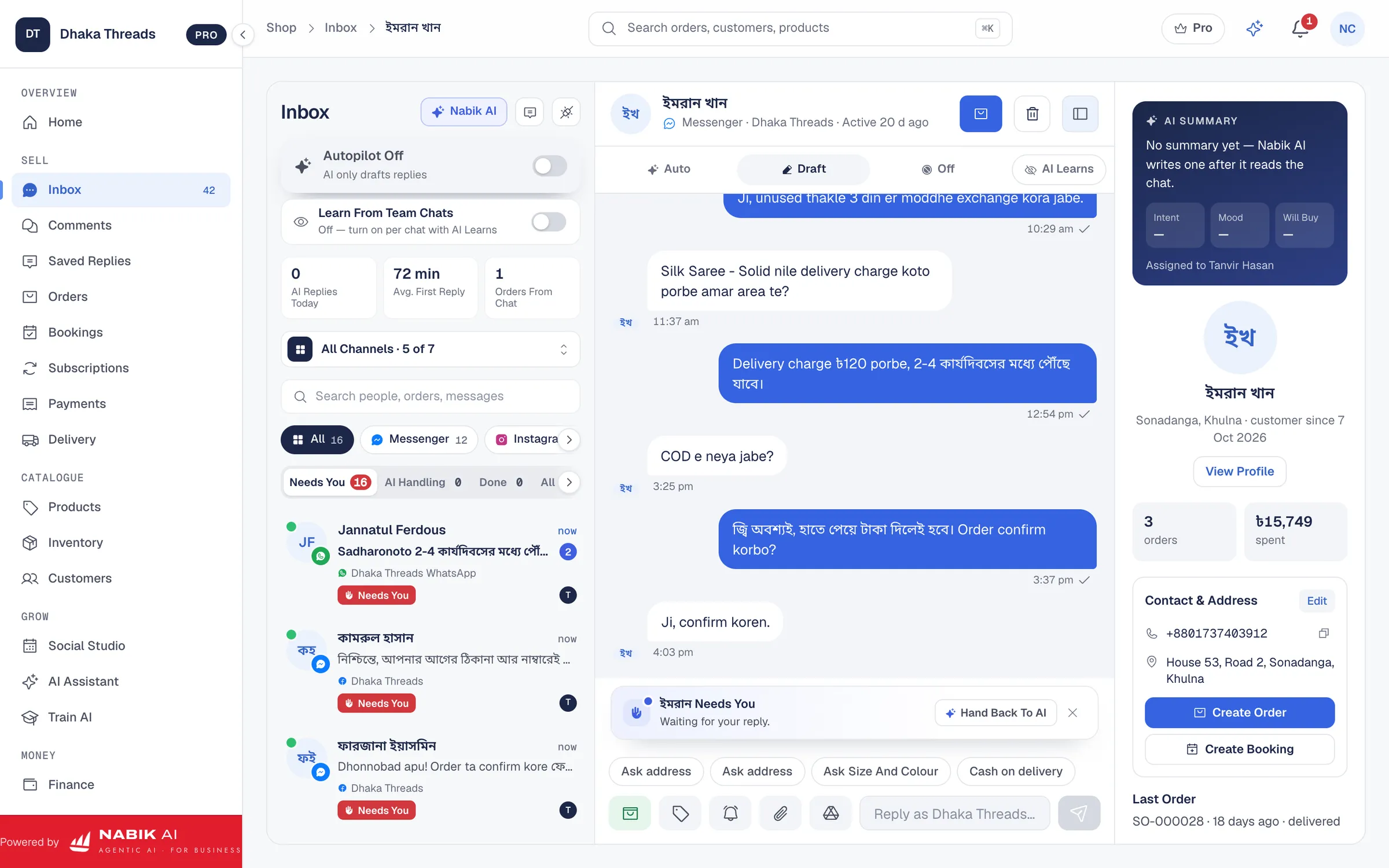
As your Page grows, comments and messages increase and it becomes hard to manage multiple inboxes. Tools that give you a single social inbox for Messenger, Instagram, WhatsApp and comments, like Nabik AI’s Social Inbox, make this daily work much more organised.
- Post clear product photos and prices regularly.
- Reply quickly to comments asking for price or inbox.
- Collect full customer details in one place before sending to courier.
- Track each order status: pending, confirmed, shipped, delivered, returned.
- Update customers proactively if there is any delay or stock issue.

How Is F-Commerce Different From An Online Shop?
F-commerce and a full online shop both sell on the internet, but the workflow is quite different. In f-commerce, there is no typical “Add to cart” and checkout page; chat is the checkout. In a full website shop, customers browse categories, add items to a cart, fill their address once and pay online or choose COD.
For small Bangladeshi sellers, f-commerce is cheaper and faster to start. You do not need to pay a developer or manage hosting; Facebook and Instagram are free. But an organised website can handle more orders with fewer mistakes, because customer data and stock are structured.
Many successful brands in Dhaka and outside Dhaka use a mix: they sell mainly via Facebook and Instagram, but also keep a simple website as a backup. Orders from both channels then go into one system or at least one spreadsheet. The table below shows the key differences so you can decide what suits you now and what to plan for later.
| F-commerce | Own Website | |
|---|---|---|
| Where selling happens | Facebook Page, Instagram profile, WhatsApp, Messenger | Your own domain (e.g. yourshop.com) |
| How orders close | Chat conversation (DM/inbox/WhatsApp) | Online cart and checkout form |
| Starting cost | Very low (Page + phone) | Higher (domain, hosting, development or platform fees) |
| Control over design | Limited to Facebook/Instagram layout | Full control over branding and layout |
| Customer data | Scattered in chats, comments and sheets | Organised in database and dashboards |
| Trust and brand feel | Feels informal, like buying from a friend | Feels more formal and branded |
| Scaling to many orders | Needs more staff to reply to chats | Easier automation and self-checkout for customers |
What Are The Common F-Commerce Problems?
The first big problem is missed messages. When you are getting pings in Messenger, Instagram, WhatsApp and comments, it is easy to lose a serious buyer’s message under “pm” and “price?”. Customers often complain, “inbox dilam reply dilen na”, and move to another Page.
Second is stock mistakes. You post a design, many people order, but actually you have only a few pieces left. If you confirm and then later say “sorry apnar size nai”, customers lose trust. This gets worse when you sell across multiple channels (Page, group, WhatsApp resellers) without a shared stock count.
Third, Bangladeshi f-commerce shops suffer from COD returns and fake orders. People confirm orders then do not receive calls, give wrong addresses, or reject parcels at the door saying “amar dorkar nai”. You still pay two-way courier charge on many returns, which kills profit.
Finally, because many things are manual, you can mix up phone numbers, amounts and notes, or forget which courier got which parcel. Over time, this also creates VAT and accounting confusion. To go deeper into reducing these problems, see our guide on reducing fake COD orders and returns and our guide on inventory for a Facebook shop.
- Messages scattered across platforms cause slow replies and lost orders.
- No central stock system leads to over-selling and cancelling orders later.
- COD returns and fake orders eat into profit through double courier charges.
- Manual notebooks and sheets increase mistakes in phone, address and amount.
- Weak records make it harder to handle VAT and business reporting later.
How Do You Start An F-Commerce Business In Bangladesh?
Starting f-commerce in Bangladesh is straightforward, but you should treat it as a real business from day one. First, decide your niche: clothing, hijabs, shoes, cosmetics, gadgets, food, home decor or services. Then set up one clear Facebook Page with a proper name, logo, cover photo and About section in Bangla and English.
Next, prepare simple but professional product photos and prices. Write short, clear captions and post consistently. For help with selling captions that make people inbox you, you can follow the tips in our guide on Facebook post captions that sell.
From the first order, build a habit of recording every sale properly: customer name, number, address, product, courier, COD amount and delivery status. This can be a Google Sheet at the beginning, later upgraded to a proper order management system. Also decide which couriers you will use for Dhaka and outside Dhaka and test a few before fixing long-term deals.
- Choose a clear niche and name for your Page.
- Set up Facebook Page, Instagram and WhatsApp Business profile with the same branding.
- Prepare product photos, prices and basic policies (delivery charge, return, payment options).
- Test 1–2 couriers to compare delivery time, coverage and COD handling.
- Start simple with a spreadsheet for orders, then move to software when chats and orders grow.
Step 1: Set Up Your Facebook Page
Use a clear brand name, add logo and cover, fill About with contact number, WhatsApp link and delivery info in Bangla and English.
Step 2: Organise Your Products
Group items by category, write down purchase price, selling price and available stock per size and colour.
Step 3: Decide Policies
Write basic rules for delivery charge, advance or full COD, return conditions and handling of fake orders.
Step 4: Create Posting Plan
Plan at least 3–5 posts per week (mix of product photos, reels, customer reviews and stock updates).
Step 5: Set Up Order Tracking
From the first order, track each parcel from confirmation to delivered/returned so you can see profit and loss clearly.
What Does A Registered Online Business Need?
If you are doing serious f-commerce, at some point you may want to become a properly registered online business in Bangladesh. Registration helps with trust, opening bank accounts, working with larger couriers and marketplaces, and handling VAT and tax correctly. The exact requirements and process can change, so you must confirm the current rules with the Ministry of Commerce, NBR or a professional adviser.
Typically, a business will need a trade licence from the city corporation or municipality, plus a TIN (Tax Identification Number) for the proprietor or company. Once your annual turnover crosses the VAT threshold or you choose to register, you may also need VAT registration and to issue Mushak 6.3 VAT invoices. Our guide on Mushak 6.3 VAT invoices explains how software can help, but always confirm details with NBR or an adviser.
As an online seller, it is also wise to have written terms and conditions, privacy policy, return and refund policy and delivery policy, even if they are simple and written in Bangla and English. Put these in your Page info, pinned post or a document you can send customers. This reduces confusion like “delivery free naki?”, “return korte parbo?” and helps if there is any dispute.
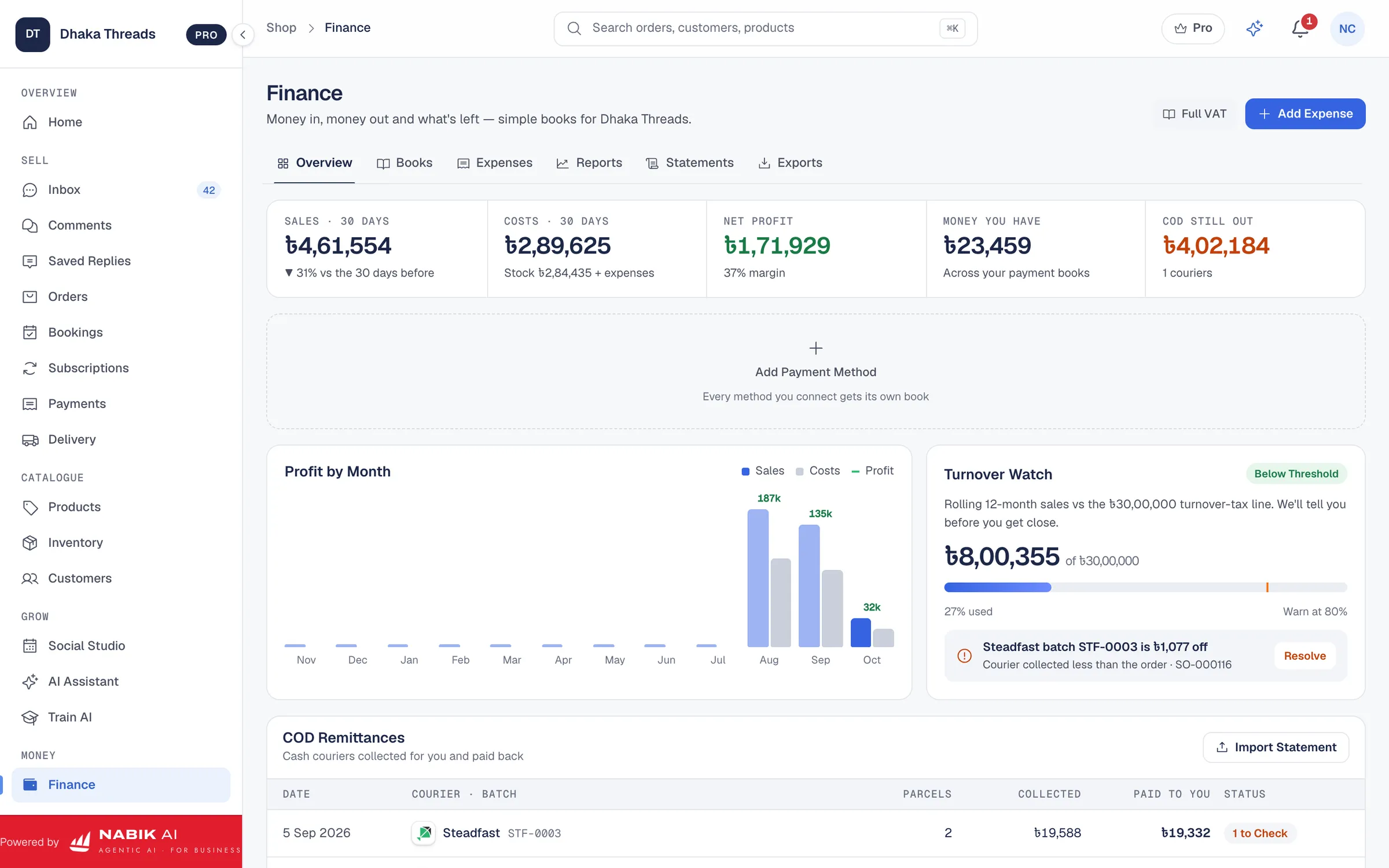
Finally, keep proper records of sales, purchase costs, courier charges, returns and discounts. This is not just for tax; it shows you which products are actually profitable and which are only giving you “orders” without real earnings. Software with finance and VAT features can make this much easier as you grow.
- Check latest registration requirements with the Ministry of Commerce or a qualified adviser.
- Get a trade licence and TIN in the name of your business or proprietor.
- Understand when VAT registration is required and how Mushak 6.3 invoices work.
- Write clear terms, privacy, delivery and return policies in Bangla and English.
- Keep accurate records of income and expenses for both tax and business decisions.
How Can You Manage Orders, Couriers And Payments Better?
Good systems are the difference between a struggling Page seller and a scalable f-commerce brand. Start by centralising your order list: one Google Sheet, notebook or software where every order is recorded with a unique ID, customer details, items, amount, courier and status. Never depend only on chat screenshots for tracking.
For couriers, clearly separate Dhaka and outside Dhaka options, with different delivery charges and expected days. Test several couriers for areas like Chattogram, Sylhet, Cumilla and northern districts, and keep notes on which ones handle fragile or high-value items better. Our guide on choosing a courier service in Bangladesh lists points to check before fixing your main partners.
On payments, decide when you will take advance bKash/Nagad and when you will allow full COD. For high-risk areas or expensive items, many shops take a small advance (e.g. delivery charge) to filter fake orders. Our guide on taking bKash payments in an online shop also applies to f-commerce: use personal vs merchant accounts properly and always confirm payment with a screenshot plus transaction ID.
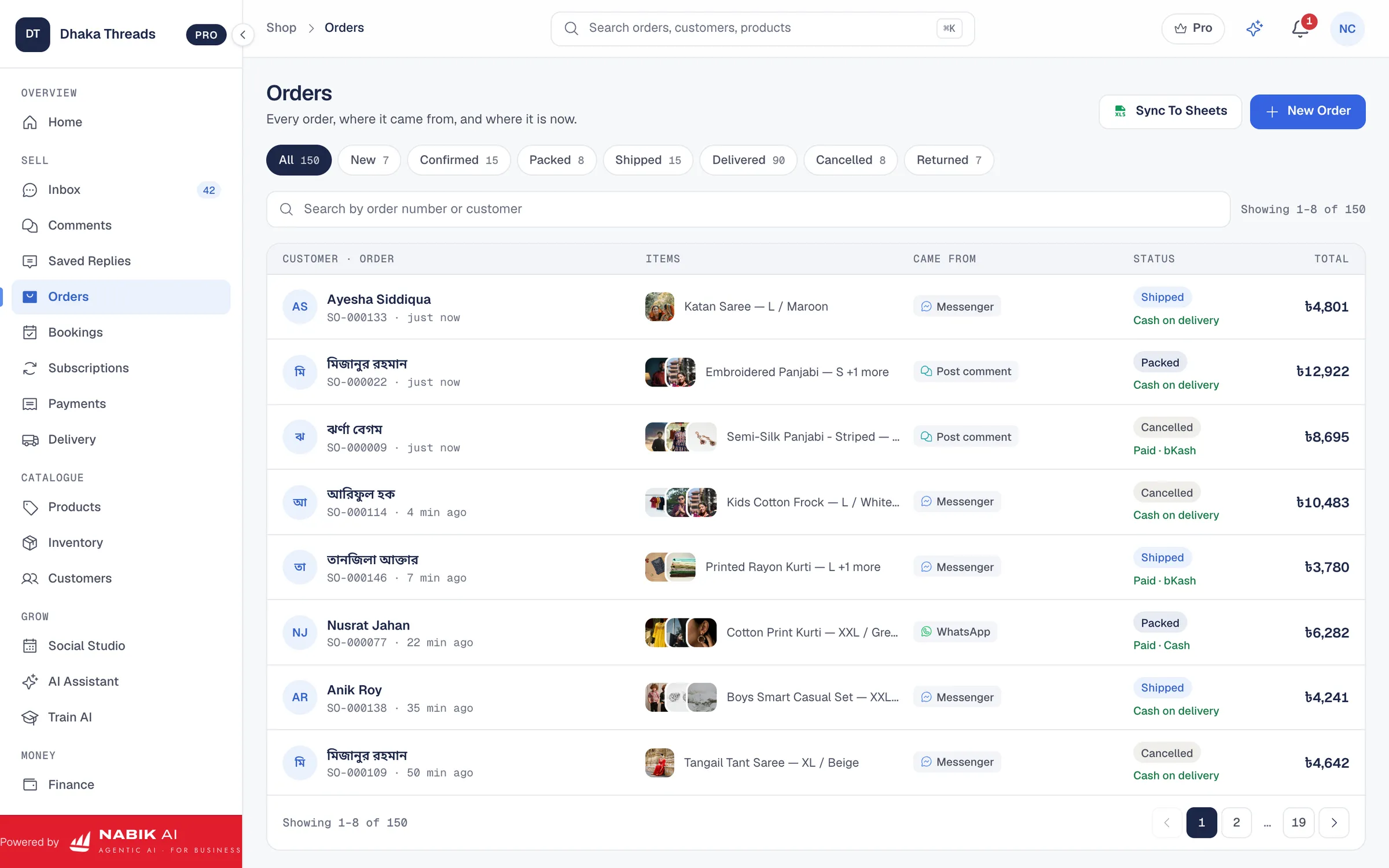
As you grow, consider using an order management system that connects orders, inventory and couriers. For example, Nabik AI’s Order Management and Courier Integration features help you keep Dhaka and outside Dhaka deliveries, COD amounts and parcel tracking in one place instead of many notebooks and apps.
- Use one master order list with unique order IDs.
- Fix 1–2 reliable couriers for Dhaka and 1–2 for outside Dhaka.
- Decide a clear rule for where you take advance and where you allow full COD.
- Confirm bKash/Nagad payments with screenshot and transaction ID before shipping.
- Move to dedicated order and courier software once daily orders become hard to track manually.
How Does Nabik AI Help F-Commerce Shops Run Smoothly?
Nabik AI is web software made in Bangladesh by Auto Probaho Technology for shops, service businesses and content Pages that sell on Facebook, Instagram, WhatsApp and their own websites. It is built exactly for the problems Bangladeshi f-commerce sellers face: missed messages, manual order taking, stock confusion and COD management.
You connect your Facebook, Instagram and WhatsApp so all messages and comments come into one Social Inbox. Nabik AI’s AI agents then answer customers automatically in Bangla, Banglish or English using your own products, prices and policies. They can reply to “price?”, “available?”, “XL size ache?” and take orders in chat, then hand over to you or your team whenever needed.
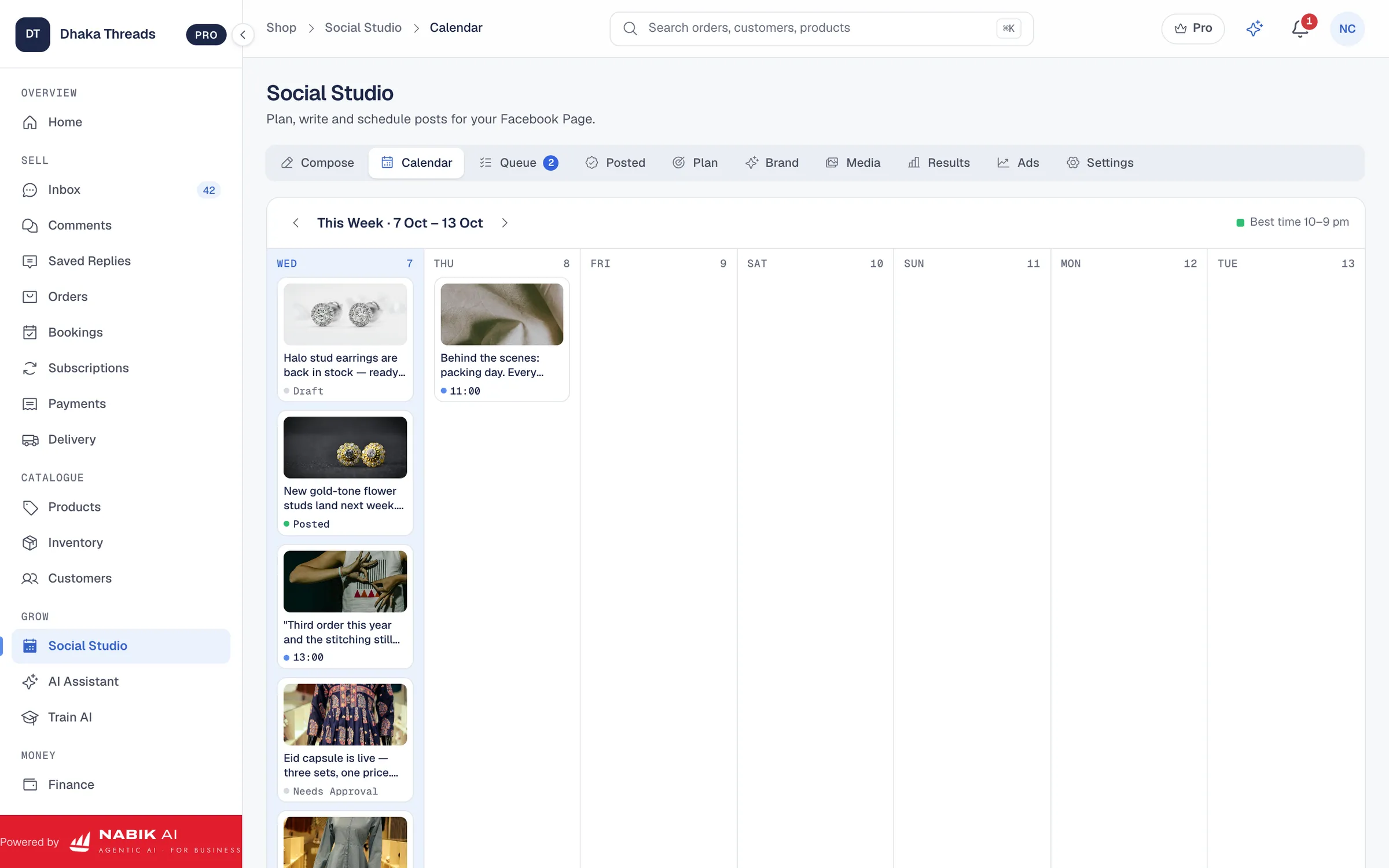
Around the AI chat, Nabik AI includes orders with cash on delivery, courier booking and tracking, inventory with one stock pool for every channel, customers and finance with NBR VAT. You can also schedule Facebook and Instagram posts, take bookings for services, and connect a WooCommerce or Shopify website later if you grow beyond pure f-commerce. The shop teaches Nabik AI by chatting with it, and it learns from every correction so replies get closer to how you actually talk to your customers.
Nabik AI runs in the browser on desktop and phone; the app is at app.nabik.ai and sign-up is at https://app.nabik.ai/signup. Plans are priced in taka and start free: Free plan (free), Pro at ৳1,990 per month or ৳19,900 per year, and Business at ৳5,990 per month or ৳59,900 per year. AI credits for extra usage are available separately. For many Bangladeshi f-commerce shops, starting on the Free plan is enough to see if AI plus proper order, courier and inventory tools make daily work easier.
- One inbox for Messenger, Instagram, WhatsApp and Page comments.
- AI agents reply in Bangla, Banglish or English and take orders using your own data.
- Built-in order, courier, inventory, customer and VAT finance tools in one place.
- Social media scheduler for Facebook and Instagram with AI captions and AI pictures.
- Bangladeshi pricing in taka with a Free plan to start and higher plans for growing brands.
FAQ
What is f-commerce in simple words?
F-commerce is selling products or services directly through Facebook, Instagram and WhatsApp instead of a traditional website. Customers see your post, message you in chat, confirm the order there and you deliver, usually with cash on delivery via courier.
Do I need a trade licence for f-commerce in Bangladesh?
If you are running f-commerce as a real business, it is usually better to have a trade licence and other registrations. The exact rules can change, so always confirm current requirements with the Ministry of Commerce, NBR or a professional adviser before deciding.
Can I run f-commerce only with cash on delivery?
Yes, many Bangladeshi f-commerce shops start with only cash on delivery. However, offering bKash or Nagad (even just for a small advance) can reduce fake orders and COD returns, especially for high-value products or remote delivery areas.
What is the difference between e-commerce and f-commerce?
E-commerce usually means selling through your own website with a cart and online payment or COD options. F-commerce means selling through Facebook, Instagram and WhatsApp, where the full order is taken inside chat instead of a website checkout.
How can I reduce fake COD orders in f-commerce?
You can call to re-confirm orders, take a small advance by bKash for risky areas, and clearly state your delivery and return policies. Keeping a record of customers who repeatedly reject parcels and using software to track returns also helps; our guide on reducing fake COD orders has more detailed tactics.
How does Nabik AI support f-commerce businesses?
Nabik AI connects your Facebook, Instagram and WhatsApp to one inbox and uses AI agents to answer customers in Bangla, Banglish or English based on your own products and policies. It also manages orders, cash on delivery, couriers, inventory and VAT finance so your f-commerce shop runs more smoothly as it grows.